Tuesday, November 12, 2013

Everyone’s favorite Christmas parasite

Notice the "ball-like" pockets of mistletoe at Jean Lafitte NP Coquille Trail head
As the leaves on deciduous trees (esp. oaks) begin to shed their leaves for annual dormancy, you may notice some green foliage remaining as rounded, “ball-like” pockets within the canopy. These round balls are specimens of leafy mistletoe, which is commonly known as the plant that you may find your teenage kids kissing under during the Christmas holidays. Leafy mistletoes are a group of parasitic plants that attack a wide list of hardwood trees in the genus Phoradendron. Parasite….what? Yes, this plant actually taps into vascular plants and steals water and nutrients from the xylem and phloem of its host. Leafy mistletoe is green, and it does photosynthesize, but most of its nutrition comes from its host. More often than not, mistletoes are not higher order pests, and will not kill old growth trees. Mistletoes are common in southern Louisiana and can be observed on roadside trees travelling westbound on interstate 10 between New Orleans and Baton Rouge, La.

Mistletoe has been associated with many traditions and rituals for thousands of years, including kissing under the mistletoe at Christmas time. The earliest documentation of kissing underneath the mistletoe was in the 16th century in England and was probably a result of a superstition that the plant aided some way with fertility and conception. This was a long time after the first report of putting mistletoe on a pedestal, however.

Thousands of years of rituals and worshiping surrounding mistletoe are known in the history of mankind, but they began with the ancient Celts, who believed mistletoe had mystical properties. This was due to the fact that trees, that have dropped their leaves for winter, were left with a plant that could survive anything. Druids, priests of the Celtic order, also noted the medicinal properties of mistletoe and in the ancient Druid language mistletoe actually meant “all healing”. The Greeks also noted mistletoe as a noteworthy organism, and believed it as a symbol of deterring damage or harm. Greeks would cut a bough of mistletoe down, and believed that through the possession of mistletoe, they could channel the powers of the mistletoe to themselves. Many examples of superstitions surrounding mistletoe are documented in literature over thousands of years. Some examples include, fire-proofing a house, epilepsy cure, promotion of conception, healing ulcers, scaring away passing demons, and protecting horses in stables.  

Over the history of man, we have been enamored with mistletoe and continue to bring nature closer to our everyday lives by studying plants. Keep the traditions alive, and one day someone might blog about your strange relationship with a parasite! 

Read more about mistletoe and its history here.

Tuesday, October 8, 2013

With fall weather comes Brown Patch

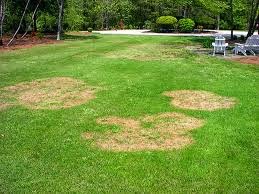
Brown patch is a common disease of warm season turfgrass, particularly St. Augustine and zoysiagrass in Louisiana. The disease is caused by the fungus Rhizoctonia solani, and is favored by warm, wet overcast weather. It causes circular brown patches of infected grass in an otherwise healthy lawn. The patches start small, but overtime and under conducive environments the diseased patches will coalesce and leave your lawn looking dismal at best. Given less favorable weather for the fungus the turf can recover, and regrowth occurs in the center of the patch leaving a donut appearance in the recovering patch. To properly diagnose the disease, monitor for the indicative “patchy” symptoms and pull a blade of stolon (“running stem”) from the turf, and look for rotting of the crown. Leaf sheaths are easily pulled from the stolon because of the deterioration of the attachment point.

Brown patch development occurs most rapidly when temperature ranges from 70 and 85 degrees F and moisture is high. Fungal activity typically stops when temperatures exceed 90 degrees F or higher.

As with any disease or pest, the key to success is healthy plants. Fertilizer programs should follow the calendar recommendation as mentioned in the LSU AgCenter Louisiana Home Lawns: best management practice fact sheet as seen on www.lsuagcenter.com. Over fertilization, or fertilizing late or early, can lead to more susceptible tissues for the fungus to consume. For St. Augustine grass fertilizer programs should have halted in August.

In addition to improper fertilization, moisture plays an important role in the disease development. Proper drainage in your lawn is crucial to remove excess water from the turf. Watering in the late afternoon will cause the severity of the disease to increase. Lawns should be watered, when needed, in the morning so the sun can evaporate excess moisture from the turf. If your lawn is newly developed, proper establishment by deep waterings and proper fertilizer should have created a network of healthy roots, which should reduce the amount of watering needed in early fall-late spring.

To control this disease fungicides should be applied preventatively beginning about mid-September, with repeated applications as necessary throughout the fall being sure to follow the instructions on the label. As of 2010, homeowners have a new fungicide to add to their arsenal of turfgrass disease control products, Maxide Disease Killer, which contains the active ingredient azoxystrobin. This product is available at Lowe’s, Stine Lumber, Tractor Supply and elsewhere, and is formulated as a granular material containing 0.31% azoxystrobin. However, please be aware that Maxide has a similar product called Maxide Disease Killer Ready to Spray that contains the active ingredient propiconazole rather than azoxystrobin. Other chemicals that are somewhat effective include the active ingredients: maneb, myclobgutanil, PCNB, propiconazole, thiophanate methyl, and triadimefon. Products containing chlorothalonil are no longer labeled for use on residential lawns. Remember to always follow and read the directions on pesticide labels before use.

For more information contact aloyd@agcenter.lsu.edu


Thursday, September 26, 2013

What's with all this webbing on my oak tree?


Lately, I have been noticing a lot of webbing on the live oak trees in the New Orleans area. I have also received a lot of telephone calls with concerns of why there is thick webbing covering the bark of old oak trees. This mysterious webbing is placed on the tree by bark lice (Archipsocus nomas), and aids in reducing the amount of predation on its population. Bark lice are often found under the webbing in clusters, and when the cluster is disturbed the cluster of bark lice scatter. These small insects were referred to as tree cattle in the older literature because of this herding behavior. The adult bark lice is brownish-black and approximately ¼ inch long, and the immature stage, or nymphs, are similar in appearance except they do not have wings. Bark lice feed on fungi, algae, dead animals and plants, and lichen found on the tree. Bark lice are considered not harmful to the tree, but rather somewhat beneficial. Although the webbing may be unsightly on your tree, the webbing appears from July and is more extensive in
as population numbers grow October. As a positive note, these insects decorate your trees with a natural Halloween decoration. If left undisturbed the bark lice will begin to eat their webbing as the population declines by the end of the year. Bark lice do not warrant any chemical control, and should not be sprayed.

Tuesday, September 10, 2013


Plant trees and shrubs in the fall and winter

The fall and winter seasons in Louisiana are the ideal times to establish ornamental trees and shrubs in the landscape. Many have the mistaken idea that ornamental plants should not be planted until early spring. This idea comes from catalogs and other online sources aimed at gardeners in the colder parts of the United States, where spring planting is recommended because soils are frozen and proper soil management cannot be carried out during the winter.

Fall and winter planting is the most ideal time to plant trees and shrubs in Louisiana because soil temperatures are high enough during much of this period to allow root development that helps plants get over the shock of transplanting before the hot weather ensues in the spring. Plant metabolism slows down in cooler temperatures and so do populations of insects; so, generally, plant maintenance is less intense in the fall and winter when compared to the summer. Planting in the fall gives the plant time to have an established root system that will yield great drought tolerance come summer when we don’t get much rainfall.  

In addition to the biological aspect of planting trees and shrubs in the fall in Southern Louisiana, nurseries will have their widest selection of shrubs and trees in the fall. For more information on maintenance and selection of urban trees, reference “Native Tree Growing Guide for Louisiana: the selection, planting and care of urban trees” at www. lsuagcenter.com

Wednesday, August 21, 2013


September is Garlic planting season

Old gardeners have a saying: “It’s time to plant garlic when the children go to school, and it is ready to harvest when they get out of school.”

As we live in Louisiana, garlic is a staple in just about every Cajun dish. Why not produce your own this year?

Garlic is a long-term crop; meaning it takes about 9 months to produce bulbs. September and October are the best times to plant garlic in Louisiana with harvest being in May and June. This means that you should plant garlic in a sunny location that you will not need for your Spring garden. You can build rows on the edges of your garden area for this purpose.

Garlic thrives in rich, well-drained soils. It is a good idea to build high rows rich with organic matter. Garlic requires a good bit of fertilizer. Before planting, 6-7 pounds of 13-13-13 should be applied per 100 foot of row, or 300-400 sq. ft.

Garlic is planted from the cloves, which are separated from the bulb and planted 2-3” deep. All cloves should be planted vertically base down to make bulbs with straight necks. Plant garlic double drilled (zig zag pattern) 12” apart. The most popular variety of garlic in Southern Louisiana is Elephant garlic or Tahiti.

Mulch garlic for weed management.

Side dressing garlic should be done 3 times per season with 1-2lbs of calcium nitrate per 100 ft of row, or 300 sq. ft. The side dressing should be done 1) when the plant come up (about 3-4 weeks after planting, 2) when growth starts in February and 3) 3-4 weeks after second side dressing.

Garlic is ready to harvest when the tops turn yellow. This typically occurs in May to early June. To dry bulbs, hang them upside down in a covered shed for 5-7 days. After dry, cut the roots leaving only ½” to the bulb. The major pest of garlic are bulb rot and thrips.


Thursday, July 25, 2013

Pepper Garden Harvest

I installed a pepper garden at the New Orleans Botanical Garden in April of 2013 with 14 cultivars of different peppers. Each pepper cultivar was unique in the level of heat, shape and size. Peppers have been harvested 4 times and total counts have been obtained and shown below. The heat is on!!! Peppers are a great planting option for any New Orleans vegetable garden. Minimal maintenance and minimal pest damage!


Thursday, July 11, 2013

Fairy Rings


When the days get increasingly warmer and wetter, a surprise explosion of mushrooms begin to appear in our lawns and along road sides. Typically, these mushrooms grow in a ring that we call a “fairy ring”. There are many fairy ring stories in European folklore. Most center on the belief that the rings were places where elves or fairies would dance. The legends warn against humans disrupting or joining the dance, lest they be punished. In France, they believed that giant bug-eyed toads would guard the mushrooms and humans who disrespected the ring would be cursed. Since, these tales have been disproven and we know now that the rings of mushrooms are the sexual stage of the fungus that spends most of its life underground, we can disregard getting cursed and can easily remove the unsightly mushrooms before they open up into a parasol. The mushrooms produces spores in gills after the cap has fully expanded. These spores are deposited and theoretically can produce more fairy rings in the future given the right environmental conditions. The rings will increasingly get larger as years progress, and growth and mushroom production is dependent on optimum moisture and temperature, which are the two major factors that induce fructification. .


IA State, Chlorophyllum molybdites showing green spores, annulus on
stem and mature and immature stages of mushrooms.
Mushrooms that produce fairy rings are “true mushrooms”, meaning they have gills underneath the cap, and include at least 50 poisonous, edible and questionable fungi. One of the more common species popping up in the New Orleans City Park area in the past couple of weeks is Chlorophyllum molybditesChlorophyllum molybdites has a ring, or annulus, on the stem, the cap may have warty spots, and if the cap is cut off of the mushroom and put on a piece of white paper it will drop green spores and you will have successfully created your first spore print! This mushroom is poisonous and should not be consumed. Mushrooms should not be consumed from the wild unless you are an expert; there are many mushrooms that have poisonous look alikes and the risk of eating these mushrooms should not be taken.